
Building, contents and portable possessions · South Africa
Home Contents
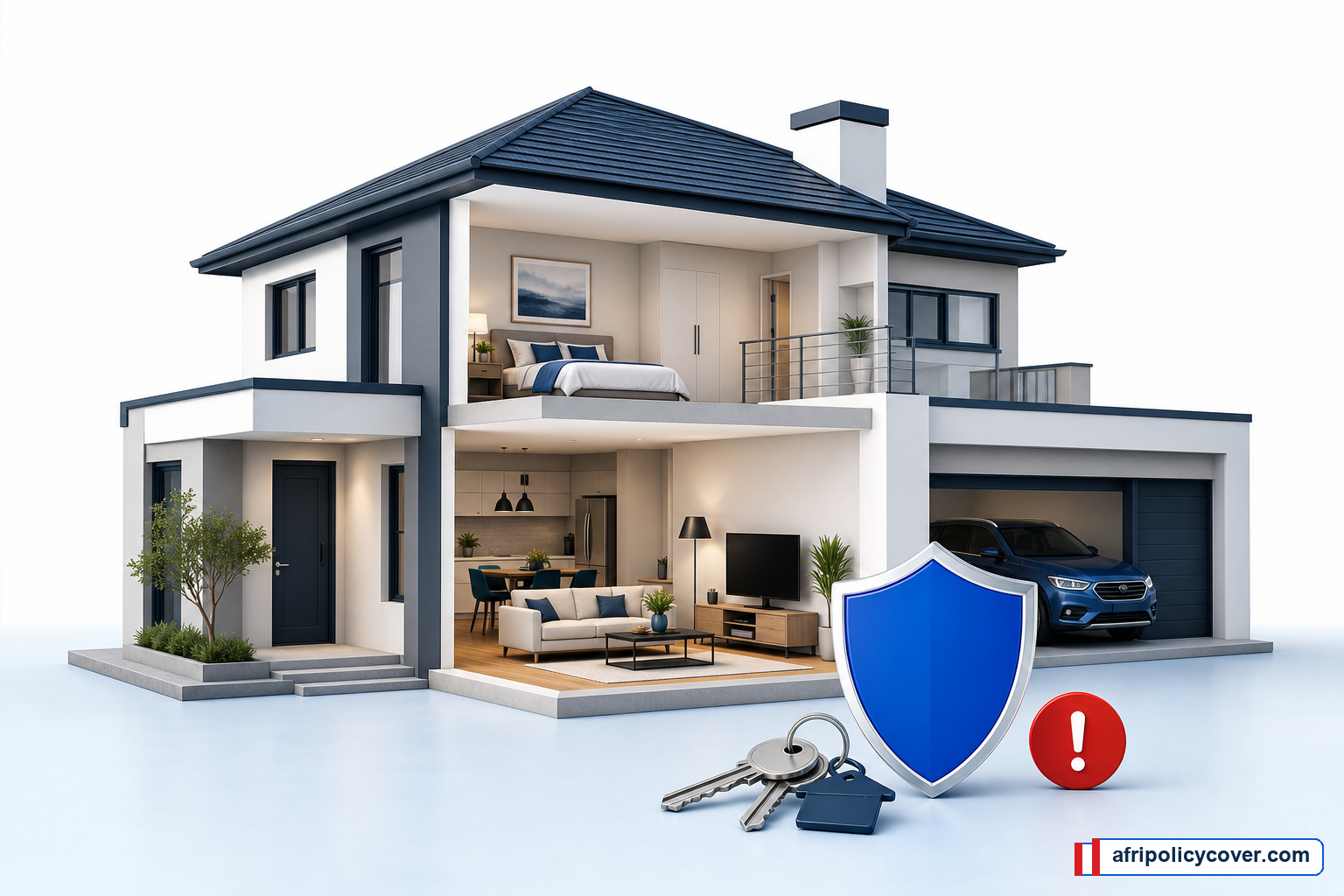
Property protection is usually split between the building, household contents and items carried away from home, because each loss affects different property.
A homeowner, tenant and landlord do not need the same cover. Separate the structure from movable belongings, value both correctly, list high-risk items and check security, occupancy and maintenance conditions.
Compare verified providers · coming soon
Reviewed 20 July 2026 · General education, not personal financial advice
Policy scope
What cover may include and where limits start
Exact benefits depend on the provider, policy wording and schedule. Use these points to ask more precise questions.
Commonly covered or available
- Insured damage to the building from listed events
- Loss or damage to household contents from listed events
- Theft where entry, security and evidence conditions are met
- Specified portable possessions when all-risk cover includes them
- Alternative accommodation or liability benefits when the policy provides them
Common exclusions or limitations
- Gradual deterioration, poor maintenance, pests, mould or wear
- Unoccupied-home or security-condition breaches
- Items above single-item limits that were not specified
- Business stock or equipment not accepted under the household policy
- Losses below the excess or outside listed insured events
Side-by-side comparison
Compare the main cover choices
| Feature | Building insurance | Contents insurance | All-risk or portable cover |
|---|---|---|---|
| Protects | Structure and permanent fixtures | Movable belongings at home | Items carried away from home |
| Typical buyer | Owner or party responsible for the structure | Homeowner or tenant | Anyone with portable valuables |
| Value basis | Rebuilding cost | Replacement value | Specified or policy limit |
| Theft away from home | Not the purpose | Usually limited | Included only within stated terms |
| Common mistake | Using market value instead of rebuilding cost | Underestimating replacement cost | Failing to specify high-value items |
Before choosing
Compare the policy details behind the premium
| Risk detail | What to verify | Possible claim effect |
|---|---|---|
| Sum insured | Current rebuilding or replacement cost | Average or underinsurance clauses may reduce payment |
| Security | Alarm, bars, gates and response conditions | A theft condition may be material to acceptance |
| Occupancy | Holiday home, tenant, unoccupied or renovation status | Different occupancy can change cover |
| Single-item limit | Jewellery, electronics, art and collections | High-value items may need specification |
| Water damage | Burst pipes, leaks and maintenance distinction | Gradual leaks can be treated differently from sudden damage |
| Alternative accommodation | Amount, trigger and maximum duration | It affects living costs after an insured event |
Decision flow
A practical route from need to policy
Move through the decision in this order so price does not hide a material difference in cover.
-
Identify responsibility
Confirm whether you insure the structure, belongings, portable items or all three.
-
Value replacement correctly
Use rebuilding and replacement costs rather than purchase or resale assumptions.
-
List special items
Record serial numbers, photos, invoices and valuations for high-value belongings.
-
Disclose the property
Describe occupancy, construction, security, business use and renovation accurately.
-
Read event definitions
Compare flood, storm, theft, accidental damage, subsidence and maintenance wording.
Claims flow
What happens when you need to claim
Always follow the actual provider instructions and deadlines shown in your policy.
-
1
Prevent further loss
Take reasonable safe steps to limit damage without discarding evidence.
-
2
Report the incident
Contact emergency services or police where required and notify the provider promptly.
-
3
Document the damage
Photograph affected areas and prepare an itemised inventory with ownership proof.
-
4
Allow assessment
Keep damaged items unless the provider authorises disposal and arrange access.
-
5
Review settlement
Check valuation, excess, underinsurance and repair decisions against the schedule.
Prepare early
Documents worth keeping ready
- Policy schedule
- Incident photos
- Inventory of damaged or stolen items
- Invoices or valuations
- Police reference for theft
- Repair quotations
Balanced view
Potential value and important limits
Where this cover can help
- Separates major property risks clearly
- Can protect everyday and high-value belongings
- Can include accommodation and liability support
Where caution is needed
- Maintenance is not insurance
- Valuation errors can reduce claims
- Security and occupancy conditions matter
Trust and verification
Check the provider and the policy
AfriPolicyCover explains general concepts. Before sharing personal information or paying, verify the provider, confirm the product disclosure and read the current policy wording.
Learn before choosing
Guides related to home contents
Questions answered
Frequently asked questions
What is the difference between building and contents insurance?
Building insurance protects the structure and permanent fixtures; contents insurance protects movable household belongings.
Do tenants need building insurance?
Usually the party responsible for the structure arranges building cover, while tenants consider their own contents and liability needs.
What is underinsurance?
It means the insured amount is below the true rebuilding or replacement value. A policy's averaging rule may then reduce a claim.
Are phones and laptops covered away from home?
Only when the policy's portable or all-risk section includes them within its limits and conditions.
Does home insurance cover maintenance problems?
Wear, deterioration and poor maintenance are commonly excluded. Sudden insured damage and gradual damage are not the same.
Can I open provider websites from AfriPolicyCover?
Not yet. The future provider section is clearly marked and no quote is currently submitted.