
Claims playbook · General · South Africa
Claims Checklist
Use a product-specific action and evidence plan from the first safe moment after an incident through assessment, settlement and any complaint, without guessing or overwriting original records.
This guide helps users prepare a claim before they contact the insurer, which reduces delays and mistakes.
Reviewed 20 July 2026 · General education, not personal financial advice
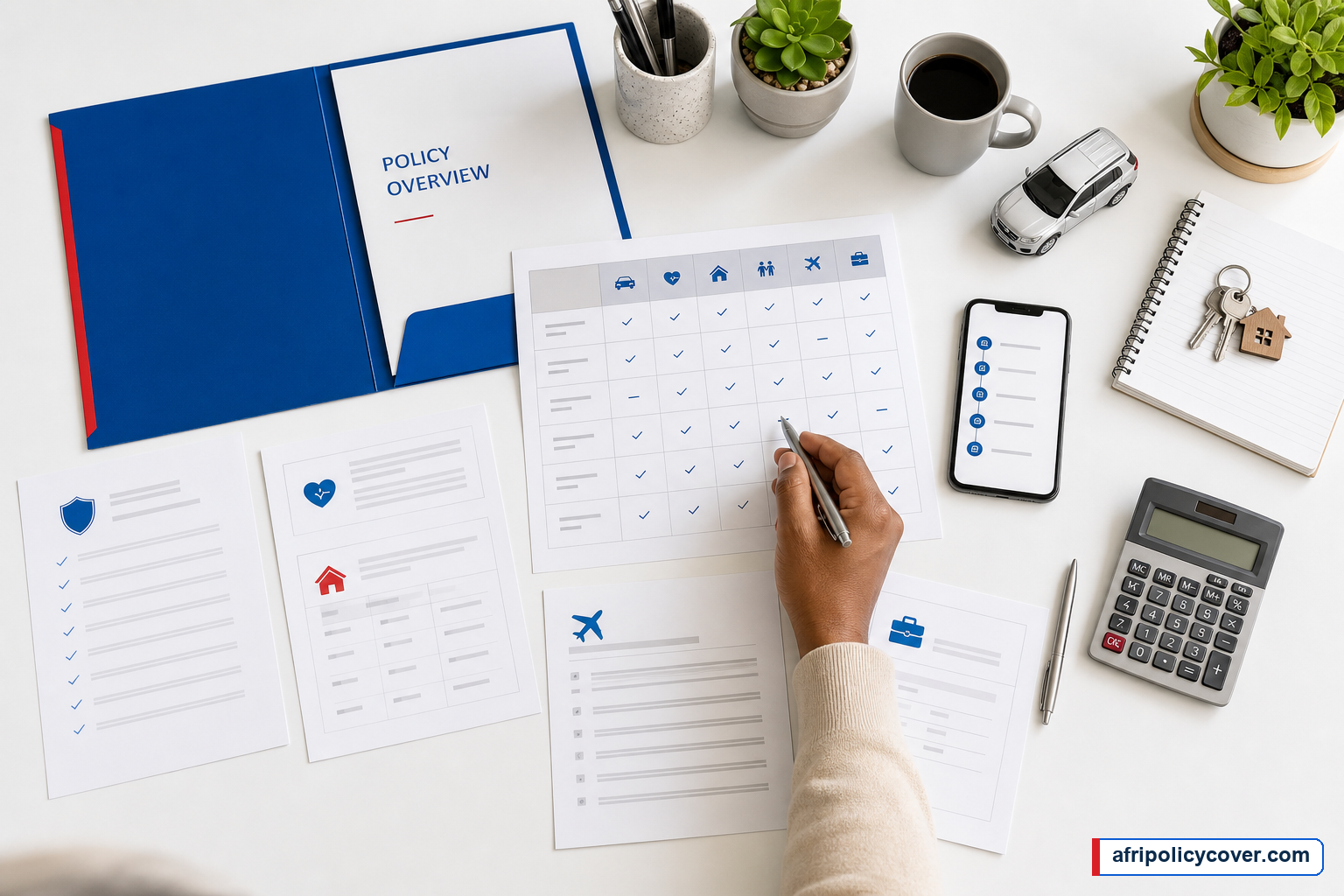
Claims file example
Trace one event from evidence to review
A hypothetical storm damages a home and vehicle overnight. The household photographs both, prevents safe further water entry, calls the home insurer before permanent repairs and uses the motor insurer's approved towing line. It keeps separate claim references and item schedules. Combining every loss into one email or discarding damaged parts would make it harder for each assessor to verify cause, ownership and cost.
Decision flow
Protect people first, then preserve the claim
Use the sequence as a working record, then confirm product-specific duties in the current provider documents.
-
Make the scene safe
Contact emergency services where needed and prevent reasonable further loss without taking unsafe action
-
Notify correctly
Use the verified policy channel and record the claim number, time and person contacted
-
Preserve evidence
Keep photographs, reports, ownership proof, damaged property and original files where practical
-
Answer requests
Send an indexed document pack and record exactly what was submitted and when
-
Check the outcome
Reconcile the decision, payment, excess, repair or rejection with the schedule and wording
Claims foundation
Separate the contract issue from the evidence issue
What it means
A claims checklist is a product-specific evidence and action plan used after an insured incident. It should protect people first, prevent avoidable further loss, meet reporting duties and create a reliable chronology. The checklist cannot guarantee payment because the insurer must still assess policy status, event cause, exclusions, conditions, value and the claimed amount.
South African context
South African claims can require police, medical, Home Affairs, employer, scheme, repairer or other records depending on the product. Use verified provider channels and protect personal information. Towing, emergency repair and healthcare authorisation rules differ. If a dispute remains after the provider's internal process, identify the current external ombud or statutory route for that product.
Claims controls
Track the moments and language that can change the outcome
When to reopen this decision
- Incident occursPrioritise safety and follow the correct emergency and reporting channels
- Evidence is collectedRecord condition before disposal or permanent repair
- Claim reference is issuedStore every message and document against one chronology
- Decision is receivedCheck amount, deductions, reasons and review rights
Terms in this guide
- Claim notification
- The formal first report of an event to the insurer or administrator
- Mitigation duty
- Reasonable action to prevent an insured loss from becoming worse
- Proof of loss
- Evidence establishing event, ownership, value and amount claimed
- Claim chronology
- A dated record of actions, submissions, requests and decisions
Policy verification
Confirm the product-specific claim rules early
| Policy detail | Question to resolve |
|---|---|
| Emergency supplier | Must towing, repair, treatment or assistance use an approved provider? |
| Reporting deadline | What period applies and what information is required for initial notification? |
| Original evidence | May damaged items be moved, repaired or discarded before inspection? |
| Assessment process | Who will assess, what access is needed and when should an update arrive? |
| Dispute route | How can factual errors, delays or an adverse decision be reviewed formally? |
Cover comparison
Match evidence to the insurer's assessment task
| Comparison point | Why it changes the decision |
|---|---|
| Event proof | Shows what happened, where, when and who was involved without unsupported conclusions |
| Policy status | Confirms the insured person or item, cover period, payment and relevant section |
| Ownership and value | Supports insurable interest, replacement cost, repair amount or financial loss |
| Compliance evidence | Addresses security, authorisation, maintenance or notification conditions relevant to the event |
| Communication record | Preserves requests, responses, deadlines, reference numbers and agreed next steps |
What it means
Build a claim file that another person can follow
Show the documents and sequence needed after an incident.
What this guide helps you do
- Lists the documents a claimant normally needs
- Explains the sequence of a typical claim submission
- Sets expectations on timelines and follow-up
Who should use this guide
- First-time buyers
- People comparing quotes
- Readers checking the policy wording
Balanced view
Potential benefits and limitations
Where this approach helps
- Reduced avoidable delay: A complete chronology helps the assessor identify missing items quickly
- Controlled evidence: Original records are less vulnerable to accidental loss or alteration
- Clear escalation: A concise complaint can identify the exact unresolved issue and requested remedy
Where caution is needed
- No automatic acceptance: A well-organised file cannot create cover where the event is excluded
- Different claim duties: Motor, health, death, travel and property claims require different evidence
- Privacy exposure: Identity, health and financial records must be shared through verified channels
Avoidable mistakes
Check these points before you commit
- Repairing before approval: Permanent work can remove evidence or breach an authorisation condition
- Sending repeated unlabelled files: Duplicates make it harder to establish what is still outstanding
- Changing facts from memory: Correct an error openly and preserve the earlier version rather than silently replacing it
Trust and verification
Use the guide, then verify the contract
AfriPolicyCover does not sell this product or provide personal recommendations. Confirm the legal provider, policy wording, schedule, disclosures and complaint route before proceeding.
Related cover
Apply this knowledge to an insurance category
Questions answered
Frequently asked questions
What will I learn from Claims Checklist?
The guide explains the decision, comparison points, common limitations and practical checks to complete before choosing cover.
Is this guide personal financial advice?
No. It is general South African insurance education and cannot account for individual needs, affordability or underwriting.
Should I rely on a premium alone?
No. Compare the cover, limits, exclusions, excesses, waiting periods and claim process on the same assumptions.
Which document controls my cover?
The provider's current policy wording, schedule and written disclosures control the contract, subject to applicable law.
How can I check a financial services provider?
Use the FSCA's authorised financial services provider search and confirm the entity and licence details shown in the provider disclosure.
Are AfriPolicyCover provider links active?
Not yet. AfriPolicyCover will identify and disclose verified provider destinations before outbound comparison links are enabled.